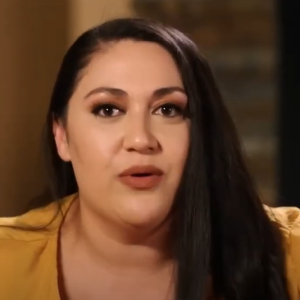
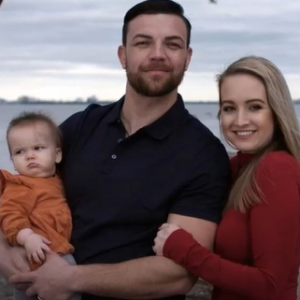
In the tangled web of the 90 Day Fiancé universe, where love stories are never simple and decisions often spark heated debates, Elizabeth and Andrei’s latest chapter has ignited a fresh storm of drama and emotion. The couple, whose relationship has been under intense scrutiny since its inception, now confronts a bold new possibility—moving to Moldova. This revelation was anything but expected; viewers watched as Elizabeth, once adamantly opposed to relocating abroad, slowly began to soften her stance amid growing pressures and complicated family dynamics. The idea of uprooting their lives is portrayed on the show not as a carefree whim but a calculated, albeit risky, venture with deep personal consequences. As they discuss the logistics and fears involved—finding a school for their child, adapting to a new culture, and confronting Moldova’s reputation for corruption—Elizabeth’s struggle between loyalty to her American roots and commitment to Andrei’s world creates compelling tension that grips the audience. The notion of “moving” takes on a weight far beyond geography; it symbolizes the crossroads between sacrifice and survival, love and practicality, making their storyline one of the most emotionally charged in the series to date.
From the very beginning, Elizabeth’s resistance to leaving the United States was clear and loud. She voiced concerns not only about the hardships of integrating into a country with a troubled reputation but about how the move might impact her son, Alex. The couple’s back-and-forth exposés on-camera reveal a rift fueled by fear, mistrust, and cultural misunderstanding. Andrei’s persistence—driven by his desire to reconnect with his homeland and offer their family what he sees as a fresh start—collides with Elizabeth’s deep-rooted apprehensions. The heated exchanges expose the raw nerves that pulse through many cross-cultural relationships: worries about corruption, safety, education, and most painfully, the fear of losing familial connections. The tension escalates as Elizabeth tries to reconcile her sense of duty to her son with the undeniable pull of forging a new life with Andrei. This conflict is not just theirs; it is emblematic of the struggles many 90 Day Fiancé couples face, where the dream of love abroad hits the hard walls of reality.
Moldova itself emerges almost as a character in this unfolding drama—both alluring and forbidding. The country’s reputation for political corruption and economic instability is brought to life through passionate arguments and real fears aired by Elizabeth, who does not hesitate to highlight these issues. The viewers are left to grapple with a sobering question: is it possible for Elizabeth and Andrei to carve out happiness in a place marked with so much uncertainty? Andrei, meanwhile, defends his homeland with a mixture of pride and defensiveness, acknowledging the issues but believing in the possibility of a better future. This clash between hope and cynicism adds depth to their narrative, steering it away from a simplistic “foreign villain” trope and into a nuanced exploration of identity, belonging, and the sacrifices love demands. Every conversation, every glance, and every hesitant step toward making Moldova home pulls viewers deeper into the emotional turmoil that defines Elizabeth and Andrei’s life together.
Layered over this is the poignant subplot revolving around Elizabeth’s son, Alex. The weight of his well-being is a silent but constant presence, influencing decisions and intensifying every disagreement. Elizabeth’s candid admission of struggling with guilt over uprooting him from the life he has known tugs at the heartstrings of the audience. Viewers witness her wrestling with a powerful maternal instinct to protect, married awkwardly to the pressures of her relationship. Andrei’s role as both a partner and stepfather adds complexity—his desire to build a family unit clashes with the reality that Alex’s happiness cannot be sidelined. This tug of war over a child’s future, stability, and happiness transcends typical reality TV drama, offering a raw, relatable look at what happens when love becomes complicated by responsibility. The emotional landscape they navigate is fraught with uncertainty, sacrifice, and hope, creating a compelling narrative thread that bridges cultural divides and personal fears.
As the story unfolds, Elizabeth and Andrei’s decision to explore moving to Moldova encapsulates the very essence of what draws audiences to 90 Day Fiancé shows: the raw, unfiltered chaos of love in challenging contexts. Their journey is a rollercoaster of hope and doubt, passion and reluctance, making it impossible to look away. The drama is not just about crossing borders but crossing emotional thresholds, forcing each character to confront who they are and what they are willing to sacrifice. With every episode, fans are left on the edge of their seats, wondering if this audacious move will cement their union or shatter it irrevocably. In the end, Elizabeth and Andrei’s tale is a heart-wrenching exploration of love’s complexities, a vivid reminder that sometimes the biggest adventure is simply belonging to each other—no matter where that may be.