In the dim, electric hush of a late evening, the world seems to press in from every shadowed corner, as if the room itself holds its breath to listen. The air is thick with the unspoken, a tension that tastes metallic on the tongue and hums like a suspended chord ready to snap. On a stage built from shared glances and half-confessed desires, a drama unfolds not with grand orchestral blasts, but with the slow, deliberate creak of a door, the soft scuff of shoes against worn carpet, and the tremor of syllables that carry more weight than any shout.
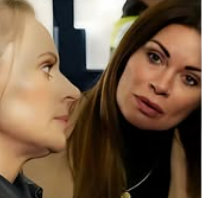
Two souls drift along a narrow ledge between loyalty and longing. One wears a mask of casual certainty, the other a constellation of questions that burn only when charged by proximity to a forbidden truth. The scene is intimate, claustrophobic, as if the walls themselves have learned the rhythms of their breaths and now anticipate every exhale. The world outside—the routine, the noise, the predictable patterns—becomes a distant rumor, a rumor too fragile to trust, while inside the room, the truth leans in close, almost tender, and then refuses to be silenced.
A name is spoken in passing, but it lands with the weight of a verdict. A memory surfaces, at first as a flicker, then as a blaze, and suddenly the room narrows to a single focus: the delicate balance between duty and desire, between the glossy surface of appearances and the raw, jagged truth that lies just beneath. The conversation shifts gears with the stealth of a criminal trap, each sentence a carefully aimed probe, each pause a weaponized silence ready to be wielded. And as the words trail off, there is a moment—the audience feels it in their marrow—where a decision is not so much made as revealed: a choice that will redraw the contours of every relationship touched by this revelation.
The tension doesn’t arrive with a bang; it grows like a tide, inch by inch, until it floods the space with a relentless, creeping inevitability. Small acts of defiance become loud indictments in disguise. A glance, a whispered aside, a touch that lingers a fraction too long—these become the punctuation marks of a narrative the characters cannot escape. The stakes rise with each breath, so that nothing, not even the most ordinary routine, can proceed without courting catastrophe. The scene becomes a circular dance of proximity and distance, where closeness promises warmth but also illuminates the peril of exposure. Each movement is a micro-declaration: I know, I see, I remember, and I am watching you watch me.
In such narratives, the real danger is not the external threat but the tremor inside the human heart—the ache of what is concealed, the fear of what might be uncovered, and the stubborn hope that perhaps, just perhaps, the truth can be rearranged to spare someone pain. Yet the truth has a stubborn spine of its own, coiled and ready, waiting for the moment when it will straighten with the force of consequence. And when that moment arrives, it arrives with the quiet certainty of a door left ajar, then slammed shut by a storm of confession. The release is both cathartic and catastrophic, a single exhale that rattles the bones of trust and leaves the air shimmering with aftershocks.
The audience is drawn into the gravity of this moment not through grand gestures, but through the intimate gravity of proximity: the way a voice can travel from one throat to another and land like a stone in a still pond, sending ripples through the surface of shared history. The conversations become no longer simply exchanges of information; they become the currency by which relationships are weighed, measured, and finally reconciled or condemned. Every sentence carries the potential to recalibrate loyalties, to redraw lines that had seemed permanent, to alter the texture of ordinary life into something taut, electric, and morally ambiguous.
As the drama tightens, a choice looms that feels both small and seismic at once. It is the kind of choice that redefines who the characters are in the waking hours after the curtain falls: will they acknowledge the truth and navigate the messy, imperfect path it carves, or will they seal the lie with a smile and retreat back into the predictable patterns that comfort them? The ethical weather shifts here from unsettled to storming, and the heartbeats of the players synchronize with the drumbeat of consequences: what is said cannot be unsaid; what is seen cannot be unseen.
The setting—a room that could be any room—becomes a crucible. Light plays along surfaces in ways that pick out the every micro-frax of emotion: a tremor in the jaw, a sigh that trembles on the edge of a kiss, the way a hand hesitates over a coffee mug as if the steam might carry away the secrets it clings to. These details matter because they anchor the human core of the scene: not the grandiose drama, but the intimate, almost claustrophobic truth of what people are willing to risk for a truth they fear to face.
And then, in a moment that feels both inevitable and shocking, the veil lifts in a way that is not cinematic flourish but a naked admission. The audience feels the breath catch in their throats as if they themselves were the participants at the center of a fragile equilibrium, watching the line between right and wrong blur, watching the safe harbor of certainty dissolve into the unpredictable sea of choice. What follows is not a verdict delivered with thunder but a resonant stillness—the quiet acknowledgment that the road forward will be altered, that the characters will never quite be the same, and that the echoes of this night will cling to memory like damp fingerprints on a window pane.
In the aftermath, the mood lingers like a low thunder, a reminder that some revelations do not explode with noise but settle into the shingles of daily life, reshaping habits, loyalties, and the very vocabulary with which people describe their own hearts. The suspense does not vanish; it migrates inward, into the spaces where trust is negotiated, into the corners where silence once guarded a secret and now guards a truth. The audience is left to carry not only the details of what happened but the resonance of what it means: how a single episode can redefine a relationship, how the act of choosing to face or to evade reshapes the moral topography of a life.
So we end where we began, only later, altered. The room has emptied of the immediate presence that fueled the feverish tension, yet the air remains charged with a certain afterglow—the memory of a moment when risk met vulnerability and did not simply yield to despair or relief but created a new texture for the days to come. The story lingers in the mind like a sharp note that refuses to fade, a reminder that human ties are braided from both tenderness and tremor, and that sometimes the most dramatic truth is the one spoken in a whisper that changes everything.
Prologue to the drama? Perhaps. But the real arc lies in the fragile, complicated dance of confession and consequence—the kind of night that changes not just the people involved, but the very air they share moving forward.