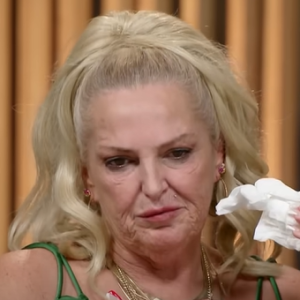
In the world of reality television, few stories captivate audiences more powerfully than a tale of love, control, and heartbreak unfolding under the glare of the public eye. Such is the case with Sarper Guven and his wife Shekinah, stars of the hit show “90 Day Fiancé.” Their whirlwind romance, shadowed by fierce public scrutiny and deeply personal turmoil, took a devastating turn when Shekinah suffered a massive heart attack, plunging her into critical condition in a hospital in Istanbul. What began as a story of passion and promise soon evolved into a harrowing account of control, despair, and the raw fragility of human life, leaving fans and loved ones alike holding their breath and praying for a miracle. Here is the minute-by-minute unfolding of a nightmare turned reality, a glimpse behind the scenes of love that became a battleground and a fight for survival that has gripped the hearts of many.
Shekinah Ghana was not your typical reality star. At 41, she was a successful aesthetician and entrepreneur in Los Angeles, a woman who had built a glamorous and financially independent life on her own terms. She was proud, strong, and fiercely independent, unafraid to admit that she didn’t need a man but wanted one—a partner, someone to share life with. Enter Sarper Guven: a charismatic, handsome personal trainer and model from Istanbul with a checkered past and a trail of thousands of former partners, a man whose dominance and need for control were as glaring as the chemistry he shared with Shekinah. Their connection was electric, unfolding swiftly through a digital whirlwind romance that defied distance and reason. Despite warnings from friends and family, Shekinah took the ultimate leap of faith, leaving behind her life and business in the US to start anew in Turkey — a decision that would bring both love and devastating challenges far beyond what she could have imagined.
The fairy tale quickly revealed cracks. Sarper’s controlling nature permeated every facet of their life together, dictating Shekinah’s appearance, restricting her freedom, and enforcing a strict regimen of surveillance, including installing a tracking app on her phone. What started as excitement became suffocating control, marked by constant tension and conflict behind closed doors. Their love, powerful and addictive, was marred by emotional turmoil and public spectacle. It was a volatile dance of passion and power, where moments of tenderness were overshadowed by arguments and distrust. Sarper’s attempts to reshape Shekinah into his ideal partner clashed with her independent spirit, and the stress began to take a visible toll. Then, amid all this strain, tragedy struck: one ordinary morning turned into a nightmare-filled day as Shekinah experienced intense chest pain, exhaustion, and breathlessness — classic signs of a massive heart attack that would almost claim her life.
The emergency response was immediate but fraught with terror. Sarper, stripped of his usual composure and control, was forced into a primal fight for Shekinah’s survival, performing CPR and pleading for help as paramedics rushed her to one of Istanbul’s top hospitals. Doctors discovered a critical blockage in the artery ominously known as the “widowmaker,” and despite successful emergency surgery, the damage inflicted on her heart was severe. In the silent, sterile ICU room, machines kept the vibrant woman alive, but her future remained uncertain. Sarper, once the resolute and controlling partner, was left broken and vulnerable, holding the hand of the woman he loved, begging her to fight for him, for them. It was a chilling testament to how quickly life can change — a relationship once defined by power struggles now reduced to a desperate hope for recovery against overwhelming odds.
As the news spread, the “90 Day Fiancé” community and viewers worldwide reacted with shock, sympathy, and fierce debate. Support poured in for Shekinah and Sarper, but so did harsh criticism aimed at the toxic dynamics exposed on the show. The public questioned how a healthy, active 42-year-old woman could suffer such a catastrophic heart event, exploring theories from genetic predispositions to the possibility of stress-induced broken heart syndrome — a painful condition triggered by emotional trauma. For Sarper, the weight of guilt and regret is a haunting burden, a painful self-awareness that his need for control and the volatile nature of their relationship may have contributed to pushing Shekinah to a breaking point. Whether a tale of love or a cautionary story of toxicity, the saga continues to unfold, with the world watching and waiting for a recovery that feels like a lifeline not just for Shekinah, but for questions about the true cost of love and control in the relentless spotlight of reality TV.
This story is far from over. The coming days and weeks will test Shekinah’s resilience and Sarper’s capacity for remorse and change. In the quiet halls of the hospital, away from cameras and judgments, a man once confident and commanding is learning the hardest truth: real love is not about dominance, control, or perfection. It’s about cherishing the imperfect, holding fast in the face of tragedy, and hoping against hope for a second chance. For now, the world watches and waits, hearts heavy but hopeful, as the battle for Shekinah’s life epitomizes not just a personal crisis, but a dramatic human drama that resonates far beyond the confines of television—a poignant reminder of life’s fragility and the enduring power of love’s true meaning.