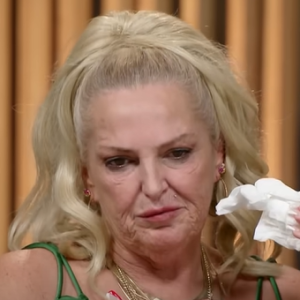
Darcey’s 50th birthday marks a turning point filled with bittersweet reflection and the weight of the past catching up to her present as she faces not just the milestone of half a century but the complex reality of returning to Bulgaria after 13 years, a country rich with memories and unspoken fears. Her husband, nervous yet hopeful, prepares to meet a family that Darcey has never been able to face with anyone before, adding layers of emotional pressure to what should be a joyful celebration. The couple shares a fragile moment of laughter and toasts, their clinking glasses carrying hopes for longevity and healing as she refers to herself as aging like fine wine, but beneath the surface lingers the anxiety of what awaits—a homecoming that is both a promise and a threat to their fragile union. The tension is tangible as Darcey admits the weight of introducing her husband to parents who never met her before, while he reveals the lingering scars of absence and the uncertainty of how this new chapter in their relationship will unfold. The fusion of old wounds and new beginnings creates a charged atmosphere where every word and glance carries significance beyond the ordinary; it is not merely a birthday, but a threshold of acceptance, love, and confrontation with the past that might redefine their entire future.
The emotional turmoil deepens as Darcey confronts the ghosts of her history, reflecting on years of silence, loneliness, and missed connections, while also carrying the burden of hopes pinned on this reunion. Her husband’s confession that he has never introduced any woman to his parents reveals the magnitude of what’s at stake—this is not just about them but about family acceptance and the blending of two very different worlds. The nervousness she feels about returning to Bulgaria captures an intimate portrait of vulnerability, a spotlight on how cultural and familial expectations wield power over personal happiness and love. They speak the hopeful Bulgarian toast “Nazdra,” yet behind this simple cheer hides a complex reality—a marriage that must survive family judgments, the distance of time, and the scars left by years apart. It’s a journey fraught with uncertainty but driven by a deep desire to finally bridge the gap between past and present, to forge a new path that can hold the weight of their shared dreams and fears in equal measure.
As the couple prepares to step across borders that symbolize more than just geography, the looming question of acceptance hangs heavily over every interaction. The stakes are more than symbolic; in their world, acceptance by family can mean security, belonging, and the possibility of a fresh start, while rejection could fracture their fragile bond irreparably. Darcey’s admission that her husband is the first man she will bring home reveals the depth of her guarded heart and the power of this moment to crack open the walls she built over the years. Their conversations, punctuated by nervous laughter and cautious optimism, underscore the fragile hope that this return will be more than painful — that it can be transformative and healing. Yet beneath the surface, the fear of rejection and the unknown future create a dramatic undercurrent that threatens to drown the celebration in doubt and tension, capturing the essence of “90 Day Fiance” drama where love is always entangled with risk and sacrifice. 
Throughout this emotional journey, the theme of time’s relentless march weaves through the narrative, emphasizing how turning 50 is not just a number but a reflection on life lived and the uncertain road ahead. Darcey’s playful wish to last ‘to 200’ is tinged with a wistful desire to defy the odds, to cling to vitality amid growing pressures. Her desire to reconnect with family contrasts sharply with the years lost, bittersweet reminders of what could have been and what still might be salvaged. The ticking clock is echoed in every scene — 50 years of life, 13 years of separation, and the hope that the future holds reconciliation and peace. The clash of emotions is rendered all the more vivid for the viewers because it is unapologetically real — a cocktail of love, fear, joy, and pain that makes the stakes so painfully high and the drama impossible to look away from. This is not just a birthday party; this is a moment of reckoning where the past and present collide with explosive intensity.
In the climax of this deeply personal saga, the couple’s vulnerability is laid bare, creating a raw, authentic drama that grips the audience. The nervous smiles, the awkward silences, the whispered worries about acceptance, and the hopeful embraces all paint a vivid picture of two people standing at a crossroads. The fear of rejection clashes with the desire for belonging, and every step toward the parents’ home feels like a leap into the unknown. For Darcey and her husband, the journey back to Bulgaria is more than a physical trip; it is a pilgrimage of their love and resilience, an emotional tightrope walk between acceptance and alienation. The drama of this milestone birthday amplifies the stakes, turning what could have been a simple celebration into a profound story of courage, forgiveness, and the quest for a happily ever after against all odds. This raw, emotional narrative powerfully conveys why “90 Day Fiance: Happily Ever After?” continues to captivate audiences—it reveals the messy, complicated, yet utterly human stories behind the reality TV veneer, stories that resonate deeply because they are about the search for love, acceptance, and belonging in a world that often feels divided.